Introduction to Singing Bowls
Have you ever wondered about the tones or frequencies emitted by a singing bowl when it’s played? In this comprehensive guide, we’ll dive into everything you need to know about the tones, notes, and frequencies of singing bowls. From the deeply soothing sounds to the technical aspects of their production, let’s embark on this sonic journey together.
Tibetan singing bowls, known for their unique and calming sounds, vary greatly depending on their type—antique, newly manufactured metal, or crystal. Each category produces distinct frequencies and tones influenced by their size, weight, and material composition. Understanding the sound mechanics of singing bowls is not only intriguing but also essential for anyone looking to harness their therapeutic and meditative benefits.

How Singing Bowl Creates Sound
The Basics of Singing Bowl Sound Production
Singing bowls produce sound through a fascinating interplay of physical mechanics and acoustics. When a singing bowl is struck with a mallet or played by running the mallet around its rim, the bowl vibrates. These vibrations generate sound waves that we hear as tones. The material of the bowl, whether metal or crystal, significantly affects the type of sound produced. Metal bowls typically offer a complex harmonic overtone series, while crystal bowls tend to produce a clearer, more piercing sound.
Factors Influencing the Sound of a Singing Bowl
The size, shape, and thickness of the bowl also play crucial roles in determining the pitch and volume of the sound. Larger bowls generally produce lower, deeper tones, while smaller bowls emit higher-pitched sounds. The thickness of the bowl’s walls can affect how long the bowl sustains a tone, with thicker walls sustaining tones for longer periods. Additionally, the manner in which the bowl is played—whether struck or rubbed—results in different types of resonance, further influencing the sound’s characteristics.
Understanding Singing Bowl Frequencies
Defining Frequency in Sound Waves
In the realm of sound, ‘frequency’ refers to the number of vibrations or cycles that occur per second. These vibrations produce waves in the air, which we perceive as sound. Frequency is measured in Hertz (Hz), representing one cycle per second. In the context of singing bowls, frequency determines the pitch of the sound produced, ranging typically from low to high tones. For example, the human ear can hear frequencies from about 20 Hz to 20,000 Hz. Singing bowls commonly produce frequencies anywhere between 110 Hz and 660 Hz but can reach up to 900 Hz in some cases.
How Sizes and Shapes Influence Frequency
Singing bowls, with their diverse sizes and shapes, naturally produce a variety of frequencies. Here’s how these physical characteristics impact their sound:
- Size: Larger bowls tend to generate lower frequencies, resulting in deeper, more resonant tones. Conversely, smaller bowls often produce higher frequencies, which are perceived as sharper or clearer tones.
- Shape: The curvature and depth of a singing bowl also play a significant role in its acoustic output. Bowls with a deep, round shape can sustain lower frequencies longer, while flatter, shallower bowls might emphasize higher frequencies.
- Material and Thickness: The material (metal or crystal) and the thickness of the bowl’s walls further influence its sound. Thicker walls can lead to higher-pitched sounds, as they can vibrate faster. The density and composition of the material also affect how sound waves are transmitted and sustained.
Understanding these elements is crucial for anyone looking to use singing bowls for therapeutic or meditative purposes, as different frequencies can have varying effects on the mind and body. This knowledge helps in selecting the right bowl to achieve specific wellness goals.


Resonance and Harmony in Singing Bowl
Exploring the Resonance of Singing Bowls
Resonance is what happens when your singing bowl continues to hum and echo after you’ve stopped running the mallet around its edge. It’s like the bowl is holding onto the sound, letting it linger in the air. This isn’t just any sound—it’s a rich, layered echo that builds up from all those trips you make around the bowl with your mallet. Larger bowls, especially those with deep, heavy Jambati types, are champs at this. They can keep a sound going strong and make the air around them vibrate with energy.
Harmonizing Sounds in Singing Bowls
Now, the harmony in singing bowls isn’t just about one sound; it’s about how the different sounds mesh together. When you strike a bowl, it’s not just one note you hear but a chord. Imagine a choir where each member’s voice blends into a beautiful array of sounds—that’s what your singing bowl is. Here’s a breakdown of the sounds you might encounter:
- Fundamental Tone: This is the core sound of your bowl, deep and resonant. You’ll get this when you gently rub a leather mallet around the outside wall of the bowl.
- Female Overtone: This is the high note that sings out when you switch to a wooden mallet and trace the outer rim. It’s sharper, clearer, and beautifully cuts through the lower hum.
- Mid-tone: This guy shows up in medium to large bowls after they’ve been played a bit. It bridges the gap between the deep fundamental and the crisp overtone, rounding out the sound.
Understanding these tones and how they come together gives you a symphony in a bowl—each part contributing to a whole that can soothe the soul or energize the spirit. Whether you’re using your bowl for meditation, therapy, or just to bring a little peace into your space, knowing how to play these harmonies can really enhance your experience.


The Range of Octaves in Singing Bowls
Can Singing Bowls Produce Different Octaves?
Yes, singing bowls are capable of producing different octaves and add a dynamic range to their uses in music and meditation. An octave in music is defined as a sequence of eight notes, such as from C to the next higher C. In this range, the frequency of the final note is double that of the starting note. For example, if a bowl produces a note at 130.81 Hz (C), it can also produce the next C at 261.63 Hz, doubling the frequency.
Factors Affecting Octave Variations in Singing Bowls
The ability to produce different octaves depends on several factors:
- Size and Volume: Typically, the larger the bowl, the lower the octave it can reach. This is due to the larger surface area which can vibrate at slower frequencies producing deeper sounds.
- Material and Design: The material (metal or crystal) and the specific design of the bowl (such as thickness and shape) significantly influence its acoustic properties. Metal bowls, with their varied alloy compositions and hammered surfaces, can produce a complex series of overtones across different octaves. Crystal bowls, often tuned more precisely, usually resonate at clearer, more singular octaves.
- Playing Technique: The method by which the bowl is played (striking vs. rimming) also affects the octave range. Striking generally produces a broader range of overtones, potentially spanning multiple octaves, while rimming can sustain a purer tone within a specific octave.
Musical Notes and Singing Bowls
How Singing Bowls Produce Different Musical Notes
Singing bowls produce various musical notes through their unique physical properties and the techniques used to play them. Craftsmen design each bowl to resonate with specific notes, influenced by its size, shape, and material, which determine the fundamental frequency:
- Material and Craftsmanship: The make-up of the bowl (metal or crystal) and its construction details determine the base pitch and the notes it can produce.
- Playing Techniques: Different methods of playing can highlight various harmonics within the same bowl. Striking the bowl with a mallet might produce one set of tones while rubbing the rim with a mallet can generate different notes.
Techniques for Playing Different Notes
To explore the full musical potential of singing bowls, several techniques can be employed:
- Striking vs. Rubbing: Striking generally yields a rich, deep note from the fundamental frequency, while rubbing the rim with a mallet brings out overtones and varied harmonics.
- Mallet Type: Different mallets (such as wood, leather-wrapped, suede) can emphasize different overtones, altering the notes produced.
- Mallet Pressure and Speed: The force and speed of rim playing affect the sharpness and volume of the notes. Gentle, fast strokes typically produce higher notes, whereas stronger, slower strokes bring out deeper tones.


Differences Between Crystal and Metal Singing Bowls
Sound Frequencies: Crystal vs. Metal Bowls
Crystal and metal singing bowls differ significantly in the types of frequencies and sounds they produce:
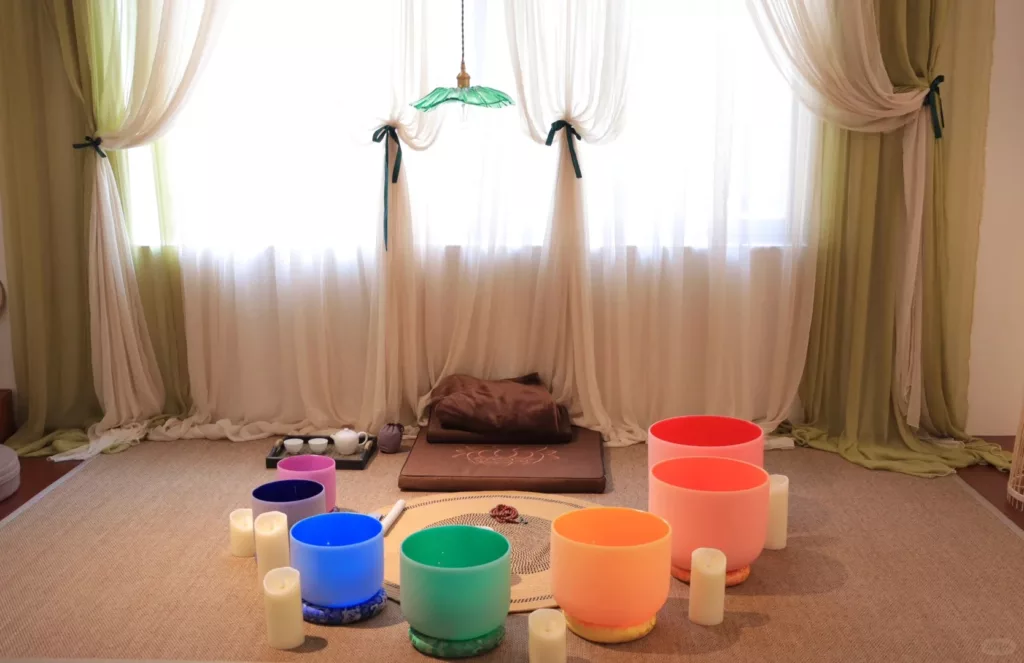
- Crystal Singing Bowls: Known for their pure and smooth sounds, crystal bowls typically produce a steady, clear note. The clarity of the tone is influenced by the type of crystal and the bowl’s thickness. Frosted crystal bowls, with their thicker walls, generate fast vibrations leading to higher pitches and louder sounds.
- Metal Singing Bowls: People highly value these bowls for their rich and complex overtones, which include the fundamental tone, female overtone, and a mid-tone. As you play the bowl, the interaction of these tones enhances the auditory experience, making it vibrant and textured. As you play the bowl, the interaction of these tones creates a vibrant sound landscape, offering a more textured auditory experience that evolves with each play.
Material Characteristics Impacting Sound
The physical properties of each material—crystal and metal—greatly influence their acoustic outputs:
- Crystal Bowls: The composition and finish of crystal bowls (frosted vs. clear) affect their pitch and volume. Thicker, frosted bowls often have higher pitches and greater amplitude, while clear bowls tend to deliver lower pitches and octaves.
- Metal Bowls: Metal bowls, typically made from a blend of various metals, offer a dynamic range of sounds due to their multiple harmonic capabilities. The alloy composition and the method of construction (cast or hand-hammered) also affect the depth and richness of the sound.
Understanding these differences can help enthusiasts and practitioners choose the right type of singing bowl based on their sound preferences and therapeutic needs, ensuring a more tailored and effective sound therapy experience.


Effects of Different Frequencies on Wellbeing
The Healing Power of Singing Bowl Frequencies
Singing bowls are celebrated for their ability to produce frequencies that can profoundly influence our mental and physical health. These instruments create vibrations that resonate with the natural frequencies of the body and brain, promoting relaxation and healing. Here’s how different frequencies impact us:
- Brain Wave Entrainment: The frequencies produced by singing bowls can align with brain waves like Alpha, Theta, and Delta, facilitating deeper meditation, enhanced focus, and increased creativity. This synchronization helps the mind transition into a state of profound relaxation and mental clarity.
- Vibrational Healing Benefits: Known as sound healing, this practice uses the vibrations from singing bowls to promote various health benefits:
- Deepens meditation
- Relieves physical pain
- Reduces stress and anxiety
- Stabilizes mood swings
- Enhances sleep quality
- Boosts creativity
- Provides mental clarity
Specific Frequencies and Their Effects
Each frequency targets different aspects of physical and emotional well-being:
- 586 Hz: Enhances circulation and influences sexuality
- 492 Hz: Supports adrenal and thyroid health
- 330 Hz: Aids kidney function and gallbladder health
- 198 Hz & 352 Hz: Improves liver and bladder function respectively
- 281.6 Hz & 220 Hz: Benefits small intestine and lung health
- 176 Hz & 117.3 Hz: Helps colon and pancreas health
How Frequencies Influence Health
Frequencies emitted by singing bowls are thought to influence both physical and mental health by harmonizing the body’s own frequencies. Research and anecdotal evidence suggest that these sound waves can help reduce stress, improve sleep, and alleviate pain, potentially through mechanisms like reducing cortisol levels and enhancing endorphin production.
Measuring the Sound of Singing Bowls
Techniques and Tools for Measuring Sound Accurately
Accurately measuring the sound frequencies of singing bowls involves using specific tools designed for sound analysis:
- Digital Tuners: These devices can precisely identify the frequency of sounds being emitted by the singing bowls.
- Frequency Analyzer Apps: Apps available on smartphones that use the microphone to analyze the sound spectrum and provide a visual representation of frequencies.
- Sound Level Meters:Typically used in professional settings, these meters not only measure the decibel level but can also analyze frequency components when equipped to do so.

Step-by-Step Guide to Using These Tools
- Prepare the Environment: Ensure that the room is as quiet as possible to avoid external noise interference.
- Choose Your Tool: Depending on the detail and type of data needed, select from a digital tuner, app, or sound meter.
- Activate the Bowl: Strike the bowl gently with a mallet or begin rubbing the rim with a playing stick to produce sound.
- Capture the Sound: Position your device near the bowl. For apps and tuners, direct the microphone towards the bowl.
- Analyze the Frequency: Observe the frequency readings on your device. Pay attention to the primary frequency and any overtone frequencies that are visible.
- Document the Results: Record these frequencies for your records, which can be useful for tracking changes or for therapeutic purposes.
By meticulously measuring and understanding the frequencies produced by your singing bowl, you can enhance both your personal meditation practice and professional therapeutic applications, ensuring you are achieving the desired sound environment.
Conclusion: Embracing the Sounds of Singing Bowls
Understanding the intricacies of singing bowl frequencies, notes, and harmonics might seem daunting, especially for those without a deep musical background. Yet, it’s essential not to get bogged down by technical jargon. The true value of a singing bowl lies not in its technical specifications but in how it resonates with you personally and spiritually.
So, why not explore the unique world of singing bowls? Each bowl carries its own character and healing capabilities. Find one that speaks to you and let its vibrations enrich your life. Dive into the experience and discover the perfect singing bowl that connects with your inner spirit. Whether it’s a Tibetan singing bowl or a crystal one, let this ancient tool enhance your meditation and wellness journey. Get your own singing bowl today and start exploring the harmonies that can transform your well-being!